How do we turn psychosocial risk policy into proof?
For HR, HSE, Wellbeing and prevention leaders, works councils and prevention committees, (industry) federations and multinationals working with ISO 45003 and/or ESG reporting.
Aligned with ISO 45003 · ESG · WHS/Psychosocial Regulations
Explore the consultancy approachMost organisations aren't short of awareness. They're short of ownership.
- Psychosocial risk has crossed from culture into compliance.
- Regulators now inspect and they don't ask what you've written down.
- They ask who acted, and what changed.
- A policy is evidence of intent, not a control.
Some are building awareness.
Some have policies but not consistent practice.
Others have practice but no evidence.
The Organisational Capability Framework™
Where you stand determines what you need next.
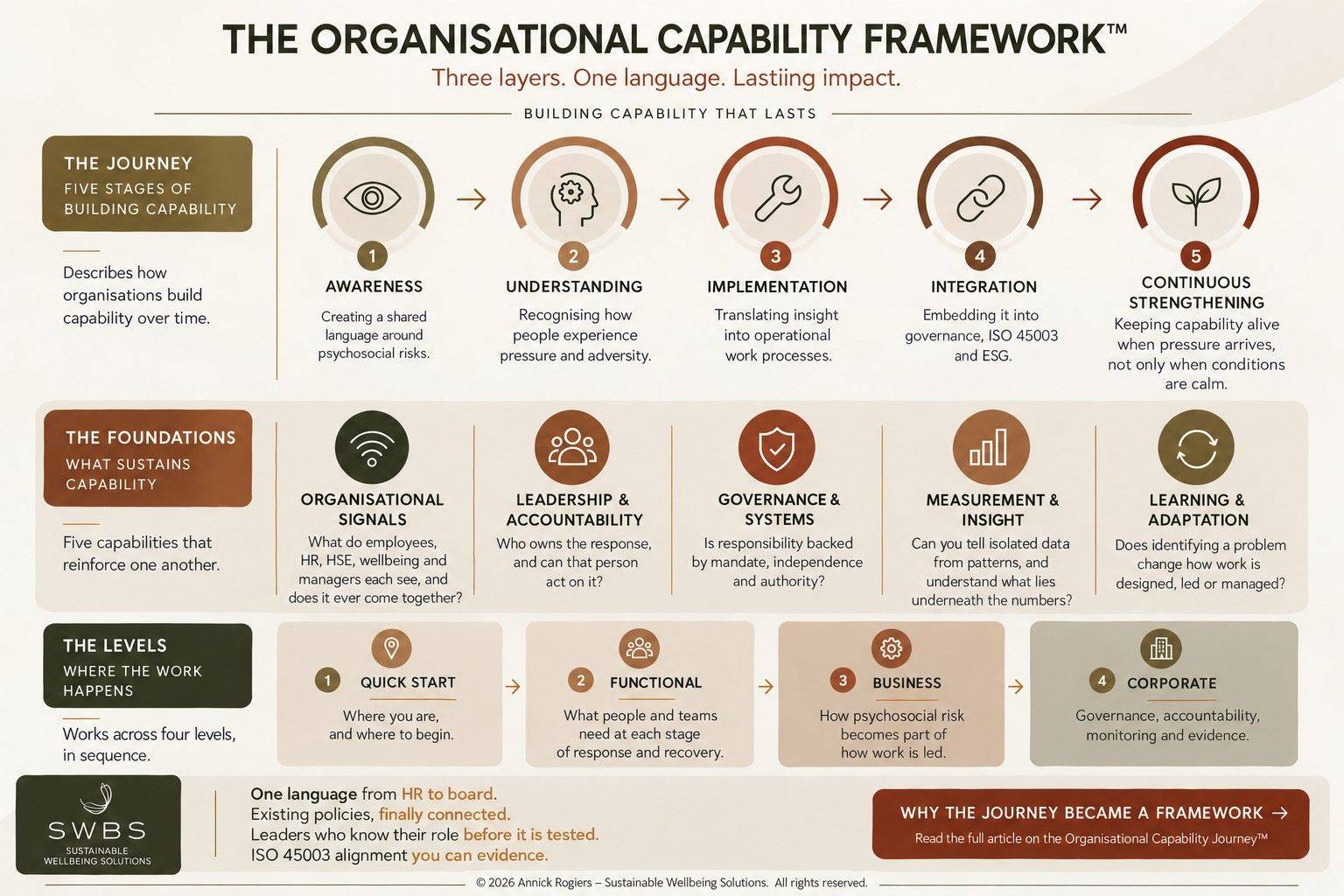
Four levels, each answering a different question:
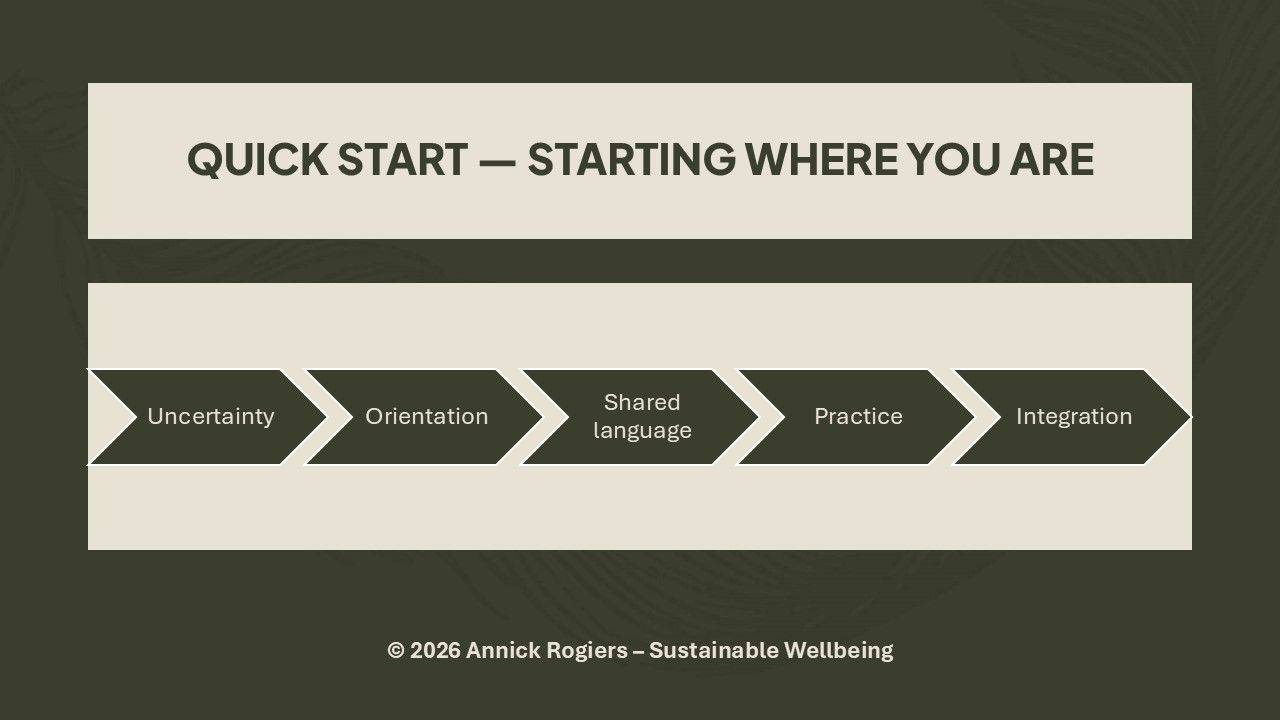
Quick start
What is actually happening here? Builds initial clarity and a shared language, using The Organisational Capability Framework™.
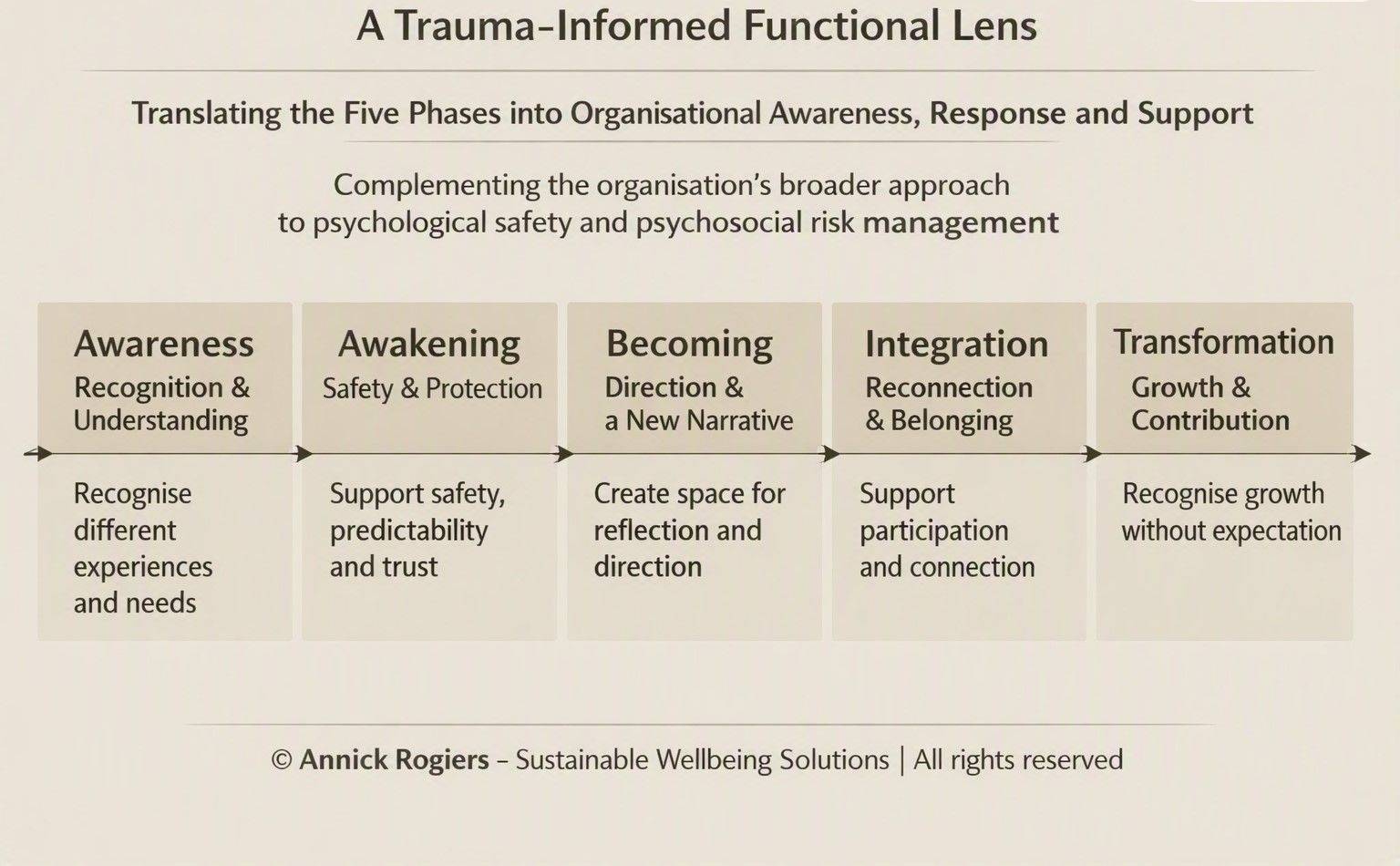
Functional Level
What do people need, at each stage? The 5-phase model. Translates psychosocial and trauma-informed principles into practice.
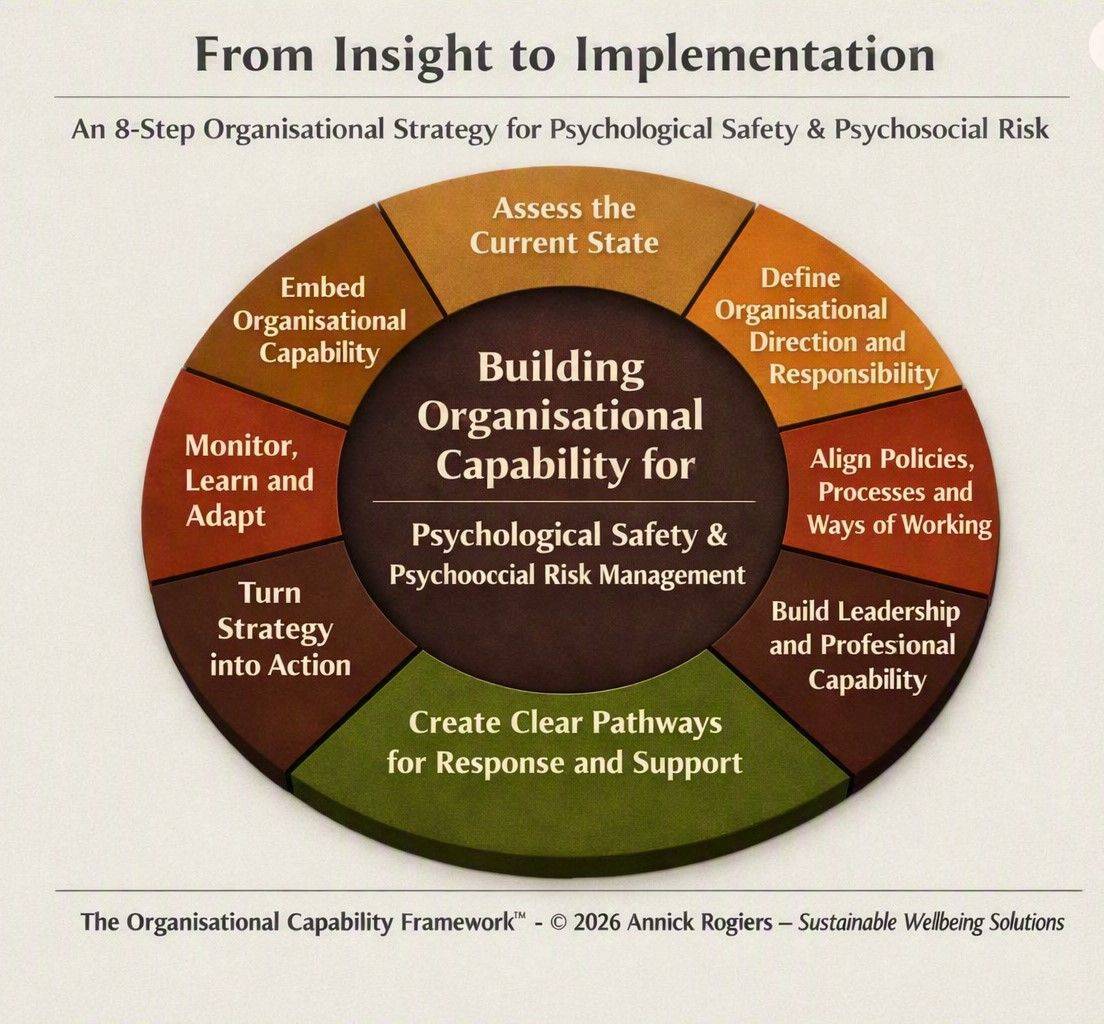
Business Level
How does this become how we work? The 8-step plan. Integrates psychosocial risk into leadership and everyday decision-making.
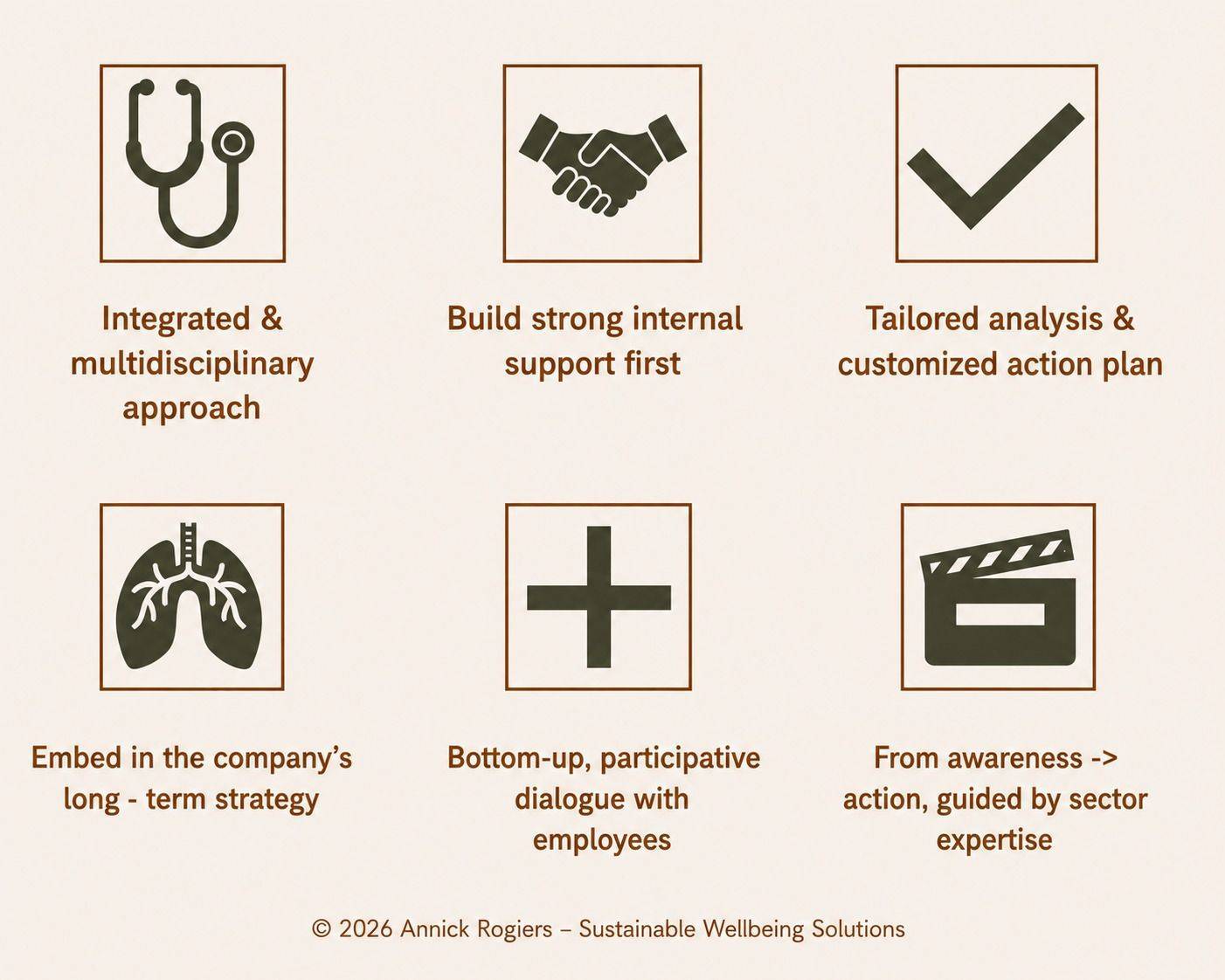
Corporate Level
How do we govern and prove it? Six recommendations. Governance, accountability, monitoring, ISO 45003 and ESG.
What does the work look like?
- Discovery: Where is psychosocial risk managed today and by whom?
- Organisational Assessment: What does the evidence actually show, across HR, Safety and Leadership?
- Strategic Roadmap: Three priorities, 90 days. What changes first and who owns it.
- Capability Building: How does it become how you work? Leadership, work practices and governance, built in.
- Long-term Integration: How do you keep it and prove it? Governance, monitoring and evidence.
What I examine
- Organisational signals · Governance & systems · Learning & adaptation · Measurement & insight · Leadership & accountability
- These are the five Foundations that make capability possible. All five are examined in every organisation. They are rarely in balance and that imbalance is what the work is designed to surface.
- A strong system with no accountability is not a safe system.
What can organisations expect?
- One language from HR to board. The same words for the same risk, in every function.
- Existing policies, finally connected. What you already have stops working in silos.
- Leaders who know their role before it's tested. Not after an incident or during an inspection.
- A risk register your board can read and an evidence trail an inspector can follow. Two audiences, one document.
- Answers ready before anyone asks. Because someone will.
Where does your organisation stand?
- Not sure where your organisation stands today?
- Take the Governance Readiness Barometer™ for a first indication.
