Wellbeing & Recovery: When Personal Experience Becomes an Organisational Mission
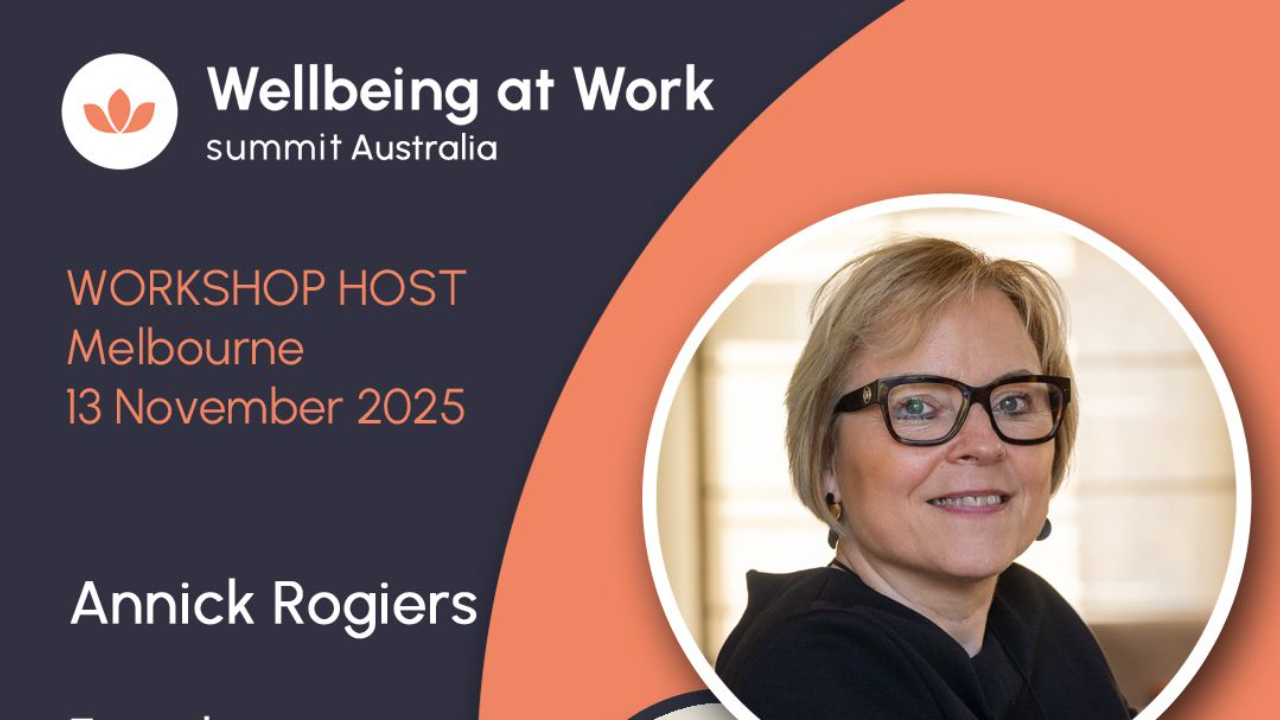
Annick Rogiers Founder, Sustainable Wellbeing Solutions - Connecting Psychological Safety, Psychosocial Risk and Organisational Practice
When Personal Experience Becomes an Organisational Mission
A personal journey with trauma can grow into an organisational mission — when the same questions keep returning across different workplaces, and it becomes clear those questions are structural, not individual.
That is what happened as I worked with organisations and HR, HSE and wellbeing professionals across Australia, the United Kingdom, Norway, Belgium, Ireland and South Africa. The stories differed. The questions didn't.
The impact of difficult experiences does not stay outside the workplace. It reaches into how people experience work, relationships, leadership and their own sense of safety.
Why is trauma in the workplace so often invisible?
Because trauma rarely announces itself. It lives in silence — in what is not said, in what is not seen.
And yet its impact is real: in how people disengage, in what they stop contributing, in the trust that quietly erodes between teams and leadership.
Organisations measure what is visible — absence, turnover, incidents. The earliest signals are usually invisible long before they show up in any of those numbers.
What happens when trauma enters the workplace?
When trauma enters the workplace, organisations are usually left without language, structure or guidance to respond well.
After writing Stronger Than Your Trauma, I realised this gap was not only personal. It was organisational.
And it is a leadership issue, not only an HR issue: leaders are expected to respond to situations they were never trained for, often without a shared frame of reference inside the organisation.
A shared reality across borders
In my work across Australia, the United Kingdom, Ireland, Belgium, Norway and South Africa, I heard the same concerns:
- How do we support people after trauma?
- How do we respond as leaders?
- How do we create workplaces where people feel safe, seen and supported?
It became clear that this is not a local challenge. It crosses organisational and geographical boundaries.
From insight to a way forward
That realisation led me to bring different worlds together: the psychological understanding of trauma, the lived experience of recovery, and the reality of organisations and leadership.
Over time the question became broader. How can organisations move beyond individual support and fragmented wellbeing initiatives towards organisational conditions that support people more sustainably?
Individual support helps people recover. Organisational capability helps prevent the conditions that cause harm in the first place.
A growing movement
What I see today is a quiet but powerful shift. More organisations are recognising that wellbeing is not a side initiative, that trauma cannot remain unspoken, and that leadership needs language, structure and guidance to respond.
This work is also about helping organisations understand their own responsibility — how leadership, work design, decision-making and governance shape the conditions in which people work.
When pressure enters the workplace, structure matters
Out of this work, the Sustainable Wellbeing Solutions Academy emerged: a structured learning pathway for professionals and organisations seeking to translate psychological safety, psychosocial risk management and trauma-informed practice into everyday organisational practice.
The Academy moves beyond fragmented initiatives by connecting these areas with leadership, organisational responsibility, governance and sustainable capability.
Because good intentions without structure collapse under pressure. Under pressure, culture is not only what is written — it is what is lived.
Who is this programme for?
This programme is designed for professionals and leaders who carry responsibility for psychological safety and psychosocial risk — often in complex environments where pressure is high and clarity is limited.
It is particularly relevant for:
- HR, HSE and prevention professionals
- Wellbeing leaders
- Managers and executives
If your role involves safeguarding people under pressure and making that responsibility sustainable and defensible over time, this offers a realistic and structured way forward.
The learning pathway supports progression from understanding towards practical application and greater organisational integration — helping participants see how responsibility for a healthy psychosocial work environment extends beyond any single function.
Not sure where to start?
Before entering the programme, organisations are invited to reflect on their current position. The Governance Readiness Self-Assessment is a concise and practical tool that helps determine whether the right conditions are in place to move forward — and where to begin.
An open invitation
What began as a personal journey has gradually developed into a broader organisational question: how can we create the conditions in which psychological safety, psychosocial risk management and responsibility become part of everyday organisational practice?
That question continues to shape my work through Sustainable Wellbeing Solutions — from individual insight to organisational capability.
Continue reading: Why I Wrote 'Stronger Than Your Trauma' → The 5 Phases of Post-Traumatic Growth: A Personal Perspective →
