
Why I wrote 'Stronger Than Your Trauma – How to transform from victim to hero'
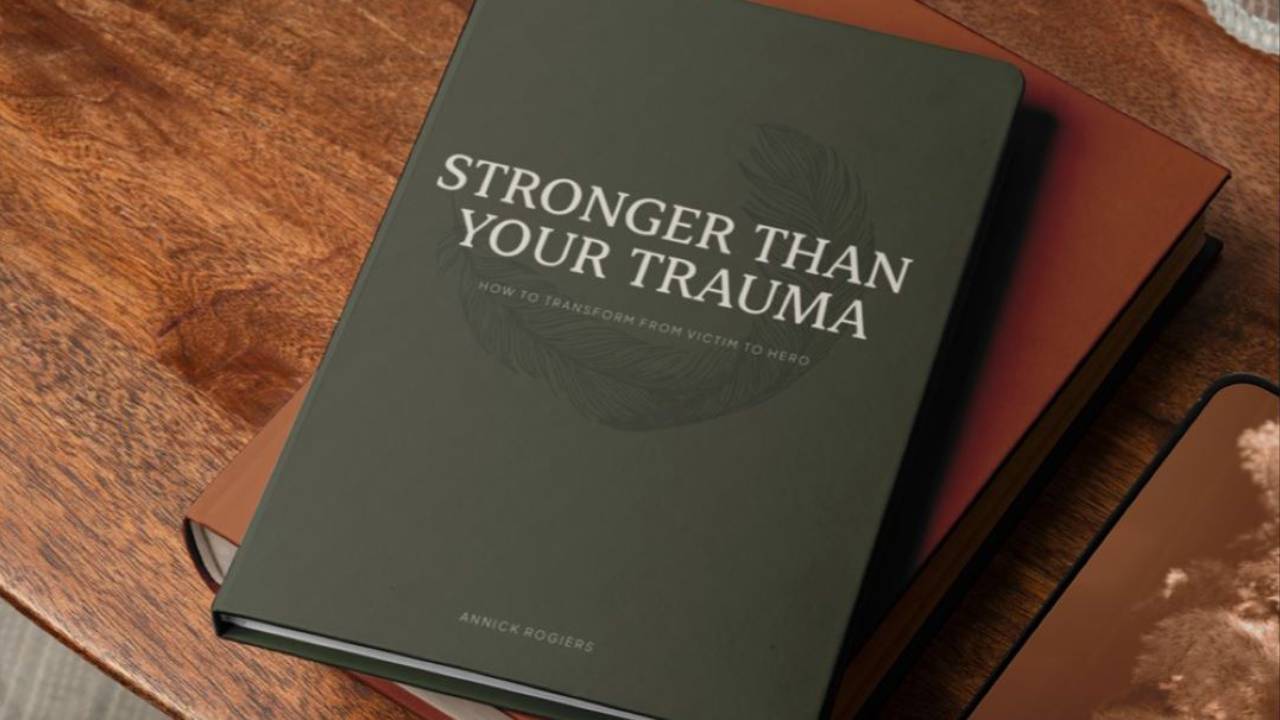
Why I Wrote Stronger Than Your Trauma – How to Transform from Victim to Hero
‘Life can be understood backwards but must be lived forwards.’ Søren Kierkegaard
Some moments arrive without warning. A car accident. Violence. Sudden loss. Moments that divide life into a before and an after. In an instant, your sense of safety can disappear. Your world no longer feels predictable. And what remains is often confusion, fear… and silence. For many people, the impact remains largely invisible to those around them.
It is a hidden reality.
When personal experience meets professional insight
Earlier in my life, I was the victim of an armed robbery. Years later, I witnessed my partner die in a road traffic accident. Two one-time traumatic events that changed my life forever. Later, in my role within HRM, I saw how often people were left alone after such events. Not because others didn’t care but because they didn’t know how to respond. There was no language. No guidance. No real support.
And one question kept returning: How can you support someone through trauma if you don’t understand what it feels like?
That question became the starting point of this book.
Why this book exists
I didn’t write this book because I had all the answers. I wrote it because I remember what it felt like not to have any. When trauma hits, you are left with pain, questions and a deep sense of disconnection. From others. From yourself. From life. There is often no guide. No gentle voice. No clear way forward.
This book is not a solution. It is a companion.
A quiet reminder:
- that what you are experiencing deserves understanding
- that you do not have to make sense of everything at once
- and that growth after trauma may be possible
Who this is for
This book is for anyone facing the aftermath of a life-altering, one-time traumatic event. Not to “fix” what happened but to begin understanding what comes next.
A First Step Forward
If you recognise yourself in these words, you don't have to understand everything at once.
For me, one of the perspectives that brought greater structure to what can otherwise feel confusing was the five-phase model of post-traumatic growth developed by clinical psychologist Dr Edith Shiro.
In The 5 Phases of Post-Traumatic Growth: A Personal Perspective, I explore how these phases can offer recognition and a gentle sense of direction after trauma — without suggesting that recovery follows a fixed or linear path.
